If you’re considering a rhinoplasty, one of your first questions is probably about recovery. This guide explains exactly what the rhinoplasty experience feels like at each stage – from the operating room through your full recovery – so you can move forward with confidence and realistic expectations.
At Philadelphia Facial Plastic Surgery & Medspa in Philadelphia, PA, Dr. Thomas C. Spalla brings extensive surgical experience to every rhinoplasty procedure, prioritizing patient comfort and natural-looking results throughout the entire process.
The short answer: most patients find recovery after a rhinoplasty much easier than they expected, though discomfort and pressure during recovery are normal.
If you’d like to talk through your specific concerns before committing to anything, schedule a consultation with our team – we’re happy to walk you through every detail.
What Happens During the Rhinoplasty Procedure Itself?
The most reassuring thing to know is that you will not feel pain during the surgery. Rhinoplasty is performed under general anesthesia or, in some cases, local anesthesia with sedation. Either way, you are completely comfortable throughout the procedure.
Dr. Spalla will discuss the anesthesia approach with you in advance based on your specific goals and health history. Your only job on the day of surgery is to arrive prepared and let the team take care of the rest.
Is a Rhinoplasty Procedure Painful During Recovery?
This is where most patients have real questions. Recovery is not pain-free, but it is very manageable for most people. Here is what you can typically expect.
The First 48 to 72 Hours
The first two or three days are the typical time period when people report some discomfort. Having performed hundreds of nasal surgeries, Dr. Spalla has found that the most common response is that there was some discomfort the first day (not pain), and then not much after that. You may feel pressure and congestion in your nose, mild to moderate soreness around the surgical area, and some swelling around your eyes and cheeks.
Prescription pain medication may be provided for this initial period. Most patients describe the sensation as feeling “stuffed up” rather than actually painful. Keeping your head elevated and resting as directed helps significantly.
Days 3 Through 7
By the middle of the first week, many patients only occasionally find the need for over-the-counter pain relief. Swelling and bruising, if present, are often at their peak during this window, but actual pain levels typically decrease.
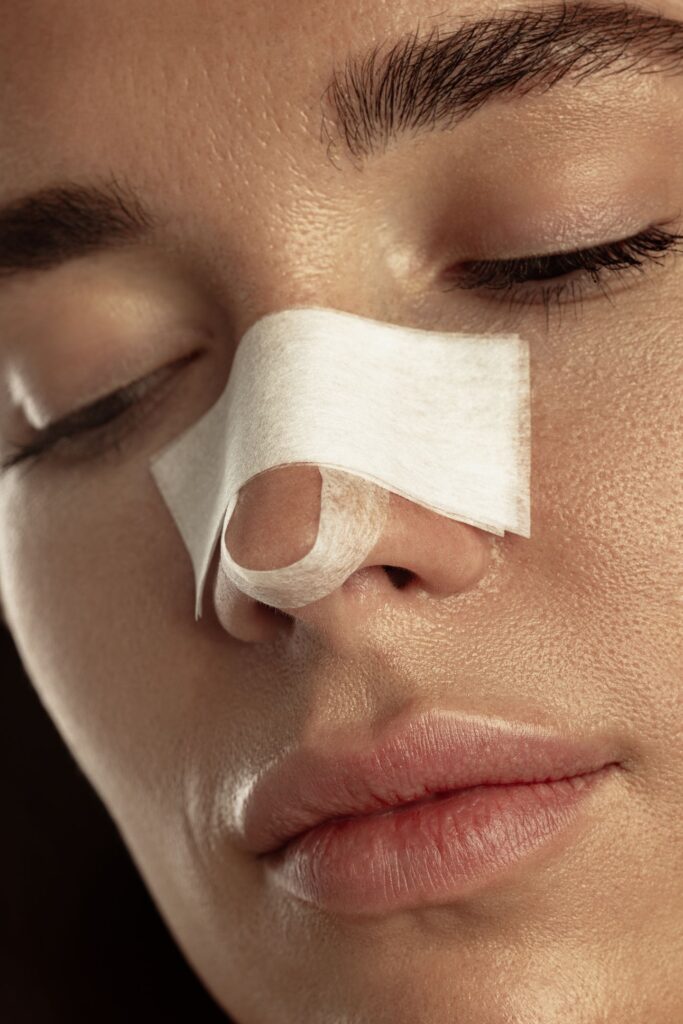
You may still feel pressure because of the swelling inside the nose, and the splint being present on your nose. Most patients have their external splint removed around day seven, which often provides immediate relief.
Week Two and Beyond
Discomfort is rarely present by this point. You may notice lingering sensitivity, occasional minor swelling, and some numbness at the tip of the nose – this is completely normal and temporary.
For a detailed breakdown of what to expect week by week, our rhinoplasty recovery timeline guide walks through each phase in depth.
What Factors Affect How Much Discomfort You Experience?
Not every rhinoplasty is the same, and your personal experience will depend on several variables.
The complexity of your procedure. A rhinoplasty that addresses both cosmetic and structural concerns – such as a deviated septum – may involve a slightly longer recovery than a more limited cosmetic refinement. You can explore the difference in our guide to septoplasty vs. rhinoplasty.
Open vs. closed technique. Open rhinoplasty involves a small incision between the nostrils and typically involves a bit more initial swelling. Closed rhinoplasty keeps all incisions inside the nostrils. Dr. Spalla will recommend the approach that best fits your anatomy and goals.
Your individual pain tolerance. Every patient experiences recovery differently. Some people are back to light activity within a week; others prefer more rest time. There is no single “right” timeline.
How well you follow aftercare instructions. Proper aftercare makes a meaningful difference in how comfortable your recovery feels. These essential rhinoplasty aftercare tips are a great starting point.
Tips for Managing Discomfort After Rhinoplasty
Following your surgeon’s instructions is the single most important thing you can do. Beyond that, these strategies can help keep you comfortable:
- Keep your head elevated, even while sleeping, for the first week or two
- Apply cold compresses around (not on) your nose to reduce swelling and ease discomfort
- Avoid blowing your nose for at least two to three weeks after surgery
- Stay away from strenuous activity until Dr. Spalla clears you to resume
- Take medications as directed and do not skip doses in the early days
- Cool mist humidification really helps with congestion
Small habits add up. Staying hydrated, eating nourishing foods, and resting consistently all support a smoother, more comfortable recovery.
Ready to Take the Next Step?
Understanding that rhinoplasty is a manageable experience – not an overwhelming one – is often the turning point for patients who have been on the fence. The recovery process is a real consideration, but for most people, it is far easier to manage than they anticipated.
If you are exploring rhinoplasty in Philadelphia and want to understand what the procedure would look like for your specific goals, Dr. Thomas C. Spalla and the team at Philadelphia Facial Plastic Surgery & Medspa are here to help. Contact us today to schedule your consultation and get answers tailored to your anatomy, your concerns, and your desired results.
Frequently Asked Questions About Rhinoplasty Pain and Discomfort
How painful is rhinoplasty on a scale of 1 to 10?
Most patients rate their rhinoplasty discomfort in the mild to moderate range, typically a 3 to 4 out of 10 during the first few days. The sensation is more often described as pressure and congestion than pain.
Will I need strong pain medication after rhinoplasty?
Prescription pain medication may be provided for the first few days following surgery. Most patients are able to manage discomfort using over-the-counter medications alone, depending on their comfort level.
Is a rhinoplasty procedure painful while the splint is on?
The splint itself does not cause pain, but it can feel uncomfortable or restrictive. Most patients feel noticeable relief once the splint is removed, typically around day seven.
How long does post-rhinoplasty discomfort last?
Significant discomfort typically resolves within one to two weeks. Mild sensitivity or occasional soreness may persist for a few weeks beyond that as healing continues.
Can anxiety about pain make recovery feel worse?
Yes, anxiety can heighten the perception of discomfort. Coming into your procedure with clear, realistic expectations – like those outlined in this guide – can genuinely help you feel more at ease during recovery.
Is non-surgical rhinoplasty less painful than surgical rhinoplasty?
Non-surgical rhinoplasty uses dermal fillers and involves minimal discomfort, typically just mild sensitivity at the injection sites. It is a good option for certain concerns, though it cannot achieve the same structural changes as surgery. Learn more about non-surgical rhinoplasty options to see if it might be right for you.