Not knowing what happens in the operating room of a nose reshaping surgery (a rhinoplasty) can make the decision feel more uncertain than it needs to be. This guide explains exactly how a rhinoplasty works, from the first incision to the final result, so you can approach your consultation with confidence and clarity.
At Philadelphia Facial Plastic Surgery & Medspa in Philadelphia, PA, Dr. Thomas C. Spalla brings extensive surgical expertise and a commitment to natural-looking outcomes to every rhinoplasty procedure. Philadelphia Facial Plastic Surgery & Medspa is Philadelphia’s trusted resource for rhinoplasty patients who want to understand every step of the process before committing to surgery.
If you’re ready to talk through your specific goals with a specialist, schedule a consultation with our team – we’re happy to walk you through your options in detail.
What Is Rhinoplasty, and What Can It Change?
Rhinoplasty is a surgical procedure that reshapes the nose by modifying the bone, cartilage, and soft tissue that give your nose its structure and appearance. It can address a wide range of concerns, including the size of the nose, the shape of the tip, a dorsal hump (the bump along the bridge), nostril width, and overall facial balance.
Some patients pursue rhinoplasty for aesthetic reasons. Others seek it to correct a breathing issue, often in combination with a septoplasty to straighten a deviated septum. In many cases, both goals can be addressed in a single procedure.
The Two Main Approaches: Open vs. Closed Rhinoplasty
Before understanding how rhinoplasty works, it helps to know that surgeons use two primary techniques.
Open Rhinoplasty
In an open rhinoplasty, a small incision is made across the columella – the narrow strip of tissue between your nostrils. This allows the surgeon to lift the skin and gain direct visibility of the nasal structures underneath. Open rhinoplasty is typically preferred for more complex reshaping, tip refinement, or revision cases where precision is critical.
Closed Rhinoplasty
In a closed rhinoplasty, all incisions are made inside the nostrils. There is no external scar. This approach works well for patients who need more limited modifications, such as reducing a dorsal hump or making minor adjustments to nasal width.
Dr. Spalla evaluates each patient individually to determine which approach aligns best with their anatomy and goals. You can also explore the different types of rhinoplasty to learn more about which technique might apply to your situation.
How Exactly Does a Rhinoplasty Work? A Step-by-Step Overview
Here is what actually happens during the procedure, broken down into clear stages.
Step 1: Anesthesia
Rhinoplasty is typically performed under general anesthesia, though some cases may use IV sedation combined with local anesthesia. You will be completely comfortable and unaware during the procedure.
Step 2: Incisions Are Made
Depending on the chosen technique, the surgeon makes incisions either inside the nostrils (closed) or across the columella (open). These incisions give access to the structural framework of the nose.
Step 3: The Nasal Framework Is Exposed
Once the incisions are made, the skin is carefully lifted away from the underlying bone and cartilage. This is where the surgical work actually takes place – on the framework beneath, not the skin itself.
Step 4: Reshaping the Bone and Cartilage
This is the core of the procedure. Depending on your goals, the surgeon may:
- Reduce or smooth a dorsal hump by removing bone and cartilage along the bridge
- Refine the nasal tip by reshaping or repositioning cartilage
- Narrow the nose by making controlled fractures in the nasal bones (called osteotomies) and repositioning them
- Add volume using cartilage grafts taken from the septum, ear, or rib
Each of these steps requires a high level of surgical artistry. The goal is always a result that looks natural and harmonious with your other facial features.
Step 5: The Skin Is Redraped
Once the underlying structure has been reshaped, the skin is carefully laid back over the new framework. The incisions are then closed with fine sutures.
Step 6: Splinting and Dressing
A small splint is placed on the outside of the nose to support the new shape while initial healing takes place. Internal splints or soft packing may also be used, depending on the complexity of the procedure.
What Happens After Surgery?
Recovery from rhinoplasty is gradual. Most patients experience swelling and bruising in the first one to two weeks. The external splint is typically removed around one week post-surgery.
Visible swelling continues to decrease over the following months. The tip of the nose tends to hold swelling the longest, and final results often become fully apparent around the one-year mark. For a detailed breakdown of what to expect week by week, our rhinoplasty recovery timeline guide covers everything you need to know.
Proper aftercare also plays a major role in your outcome. Our rhinoplasty aftercare guide walks through the essential steps to support healing and protect your results.
Is Rhinoplasty Right for You?
You may be interested in rhinoplasty if you’re looking to refine the shape or proportion of your nose, improve facial balance, or address concerns that have affected your confidence. For some, it’s also a functional decision to help correct breathing issues or structural concerns. If you are not ready for surgery, it may also be worth exploring non-surgical rhinoplasty as a temporary option for minor adjustments using dermal fillers.
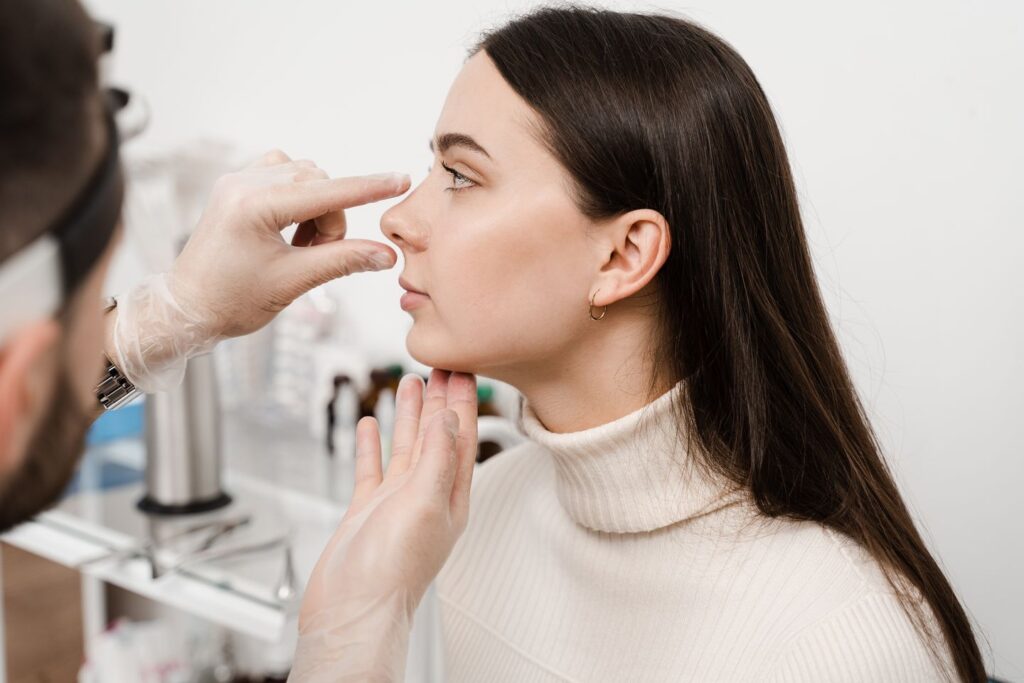
A thorough consultation with a qualified facial plastic surgeon is the most important step you can take before moving forward.
Take the Next Step with Philly Facial Plastic Surgery in Philadelphia
Understanding how rhinoplasty works is the first step toward making a confident, informed decision. The next step is a one-on-one conversation with a surgeon who can evaluate your specific anatomy and walk you through what is possible.
Dr. Thomas C. Spalla and the team at Philadelphia Facial Plastic Surgery & Medspa in Philadelphia, PA, are here to answer your questions and help you explore your options without pressure. Contact us today to schedule your consultation.
Frequently Asked Questions About How Rhinoplasty Works
How long does a rhinoplasty procedure take?
Most rhinoplasty procedures take between one and a half to three hours, depending on the complexity of the changes being made. More extensive reshaping or revision cases may take longer.
Will I have visible scars after rhinoplasty?
In a closed rhinoplasty, all incisions are inside the nostrils, and no external scar is visible. In an open rhinoplasty, a small scar is left on the columella, but it typically fades significantly and is difficult to notice once fully healed.
Is rhinoplasty painful?
Most patients report that discomfort after rhinoplasty is manageable and well-controlled with prescribed medication. Pressure and congestion are more commonly reported than sharp pain during the recovery period.
How long until I see my final rhinoplasty results?
You will notice changes relatively soon after surgery, but swelling takes time to fully resolve. Most patients see their final results between nine and twelve months after the procedure.
Can rhinoplasty improve breathing as well as appearance?
Yes. Rhinoplasty can be combined with functional nasal surgery, such as turbinate reduction, to address both aesthetic concerns and breathing issues in a single operation. This is a common approach for patients dealing with a deviated septum alongside cosmetic goals.
What is the difference between rhinoplasty and a non-surgical rhinoplasty?
Rhinoplasty is a permanent surgical procedure that reshapes bone and cartilage. A non-surgical rhinoplasty uses injectable fillers to create the appearance of a smoother or more refined nose without surgery. The results are temporary and the changes are more limited in scope.